Mechanical Engineering and Its Major Branches
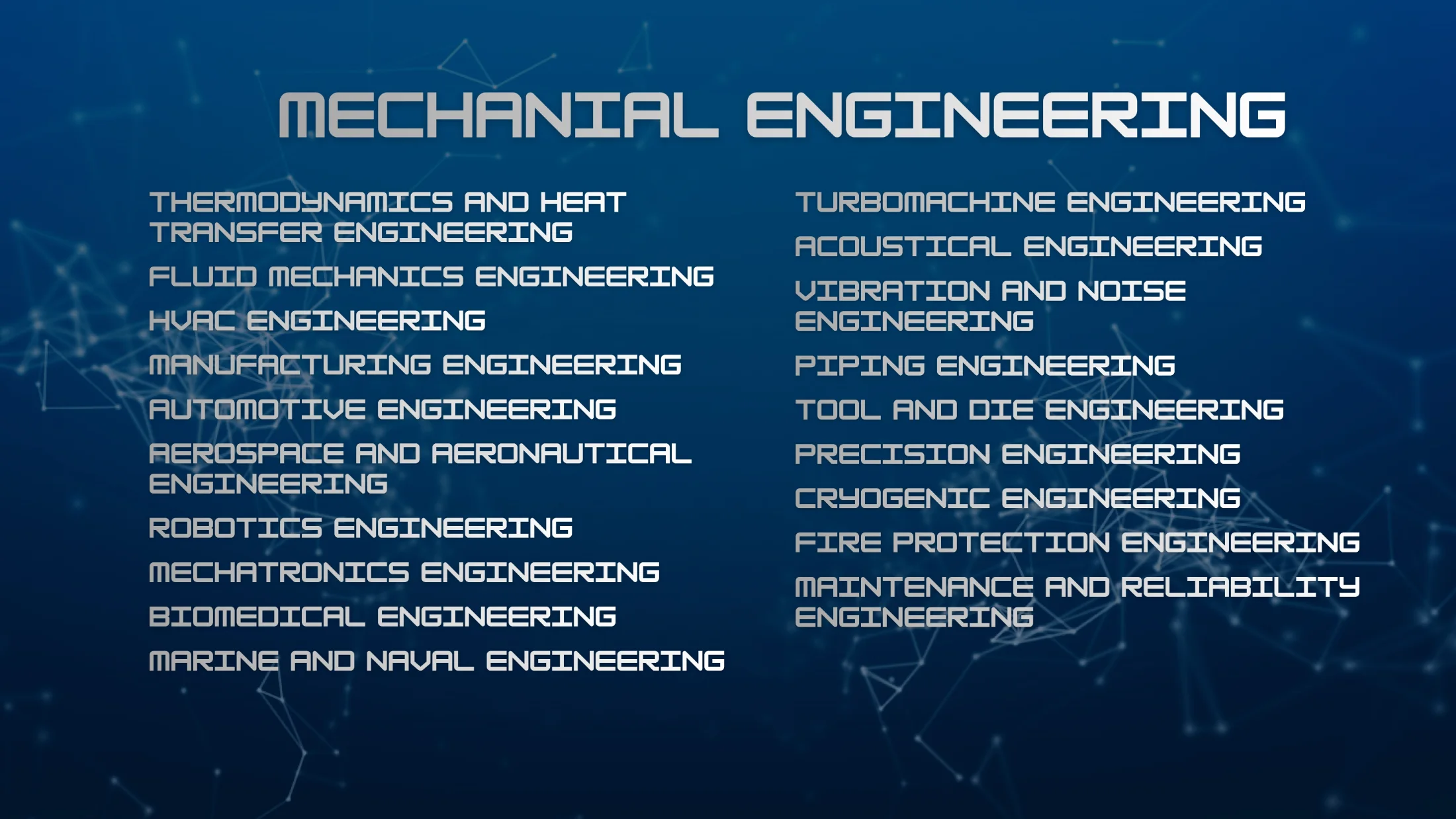
Mechanical Engineering is a core engineering discipline that applies principles of mechanics, thermodynamics, fluid dynamics, materials science, manufacturing processes, and control systems to design, analyze, produce, and maintain mechanical and energy-based systems. It supports the development of machines, vehicles, industrial equipment, thermal systems, robotic systems, aerospace structures, marine systems, and advanced manufacturing technologies.
Its major branches reflect the wide technical scope of the field, ranging from energy conversion and heat transfer to automation, precision design, vibration control, maintenance reliability, and sustainable industrial production.
Main Course Explanation: Mechanical Engineering
Mechanical Engineering focuses on understanding how physical systems move, transfer energy, generate force, and perform useful work. Students and professionals in this field study machine design, strength of materials, thermodynamics, fluid mechanics, heat transfer, manufacturing technology, control systems, engineering drawing, CAD/CAM, robotics, and maintenance systems.
The main goal of Mechanical Engineering is to create efficient, safe, durable, and cost-effective mechanical systems for industries such as automotive, aerospace, energy, manufacturing, construction, healthcare, marine, and automation.
Major Branches of Mechanical Engineering
Thermodynamics and Heat Transfer Engineering
Article details
Written by
Trapp
Reviewed by
EduFlare Admissions Team
Updated on
8 May 2026
Related articles
Keep reading
Explore more EduFlare guidance on scholarships, admissions, and studying abroad with confidence.